
About the Department
The Department of Electronics and Communication Engineering at ATME College of Engineering, Mysuru, has been a hub of innovation and excellence since its inception in 2010, with intake enhanced to 120 students in 2012. Over the years, the department has continuously evolved, achieving significant milestones in academics, research, and innovation. Set up a dedicated Research Center in 2014 to promote research culture. Department achieved NBA Accreditation in 2019 and Re-accreditation in 2022, ensuring quality standards in engineering education. It has successfully executed funded projects including a 2.22 Crore DST Project, AICTE MODROB (₹10.7 Lakhs), and SERB-funded research projects. In 2025, the department proudly introduced B.E. Honors, reflecting its commitment to academic advancement. With a strong focus on research, innovation, and student development, the department nurtures students to become competent engineers, researchers, and entrepreneurs, contributing to society and industry with cutting-edge solutions.
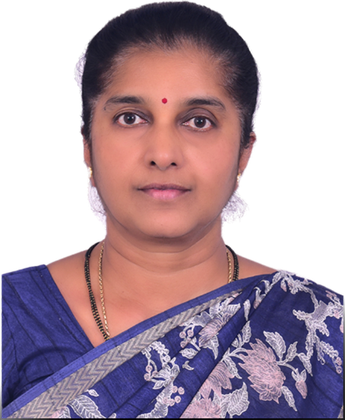
Dr. Prathiba M K
Electronics & Communication Department feels proud of the quality & need based instruction & Practical training imparted to its students to face the challenges of the fast changing corporate and technical world. Because of the dedicated faculty & excellent coaching in both theoretical and practical, students coming out from the portal of the ECE department are placed in top ranking companies in India & abroad, many students have gone for higher studies. In ECE department, students will study wide variety of Theoretical & Industry oriented subjects. The students will also implement their theoretical knowledge through mini & major projects which involve the innovative ideas & social relevance. It also provides a platform for the Research in the emerging areas through its research center & exhibit student co-curricular activities, paper presentation, innovative ideas, technical talents through IETE. ECE department is a right place to reach the goal and shape up the career.
Vision
To develop highly skilled and globally competent professionals in the field of Electronics and Communication Engineering to meet industrial and social requirements with ethical responsibility.
Mission
- To provide State-of-art technical education in Electronics and Communication at undergraduate and post-graduate levels, to meet the needs of the profession and society and achieve excellence in teaching-learning and research.
- To develop talented and committed human resource, by providing an opportunity for innovation, creativity and entrepreneurial leadership with high standards of professional ethics, transparency and accountability.
- To function collaboratively with technical Institutes/Universities/Industries, offer opportunities for interaction among faculty-students and promote networking with alumni, industries and other stake-holders.
Programme Educational Objectives (PEOs)
PEO1: To produce graduates to excel in the profession, higher education and pursue research exercises in Electronics and Communication Engineering.
PEO2: To create technically able alumni with the capacity to examine, plan, to create and execute Electronics and Communication frameworks thereby involving in deep routed learning.
Programme Outcomes (POs)
PO1. Engineering Knowledge: Apply fundamental knowledge to solve complex engineering problems.
PO2. Problem Analysis: Identify and formulate complex problems to reach substantiated conclusions.
PO3. Design/Development of Solutions: Create solutions that meet specific needs, considering health, safety, and environmental factors.
PO4. Conduct Investigations of Complex Problems: Use research-based methods to design experiments, analyze, and interpret data.
PO5. Engineering Tool Usage: Select and apply modern techniques and IT tools to engineering activities.
PO6. The Engineer and the World: Understand the impact of professional engineering solutions on society and the environment.
PO7. Ethics: Commit to professional ethics and responsibilities.
PO8. Individual and Collaborative Team Work: Function effectively as an individual or team member in multidisciplinary settings.
PO9. Communication: Communicate effectively regarding complex engineering activities with the engineering community and society.
PO10. Project Management and Finance: Apply management and financial principles to project work.
PO11. Life-Long Learning: Engage in independent and life-long learning in the context of technological change.
Programme Specific Outcomes (PSOs)
PSO1: Analyse and Design electronic systems by applying the principles of electronic circuits, embedded systems, and integrated circuits using appropriate engineering tools.
PSO2: Apply engineering knowledge in communication, signal processing, and networking to execute engineering projects and professional assignments through practical learning, internships, and teamwork.
Course
| Programme | Leading to… | Duration | Intake |
|---|---|---|---|
| Electronics & Communication Engineering | B.E (ECE) | 4 Years | 120 |
Short Term Goals
- To improve academic performance of students using innovative and creative methods of teaching.
- To conduct programs for students to acquire better skills.
- To encourage research activities.
- To strengthen the department infrastructure and human resources.
- To conduct workshops/conferences/seminars for knowledge sharing.
Long Term Goals
- To take up sponsored projects from private and government organizations.
- To establish a research center for facilitating research activities in various domains of Electronics and communication Engineering.
- To offer consultancy services to industries.
- To establish and strengthen industry-institute interaction.
- To have more number of publications and patents in the emerging areas of Electronics and Communication Engineering.
- To be among top ten leading institutes in India and abroad and be recognized as the best department in terms of research and innovation.
- To create entrepreneurs in the area of Electronics and Communication Engineering.
Class Incharge — ECE (Academic Year 2026–27)
| Sl. No. | Semester | Section | Class Incharge | Mail ID | Phone |
|---|---|---|---|---|---|
| 1 | 3rd | A | Dr. Shalini Hanok | dr.shalinihanok_ec@atme.edu.in | 8095078557 |
| 2 | 3rd | B | Mrs. Madhurya Eshwar | madhuryabeshwar.ec@atme.edu.in | 8861414341 |
| 3 | 5th | A | Dr. Manjula A V | Dr.Manjulaav.ec@atme.edu.in | 8277417079 |
| 4 | 5th | B | Mr. Manjunath K | manjunathk_EC@atme.edu.in | 9738403734 |
| 5 | 7th | A | Mrs. Swetha K T | swethakt.ec@atme.edu.in | 8428249852 |
| 6 | 7th | B | Mr. Chandra Shekar P | CHANDRASHEKARP_EC@atme.edu.in | 9538584312 |