
About the Department
The Department of civil engineering is growing tremendously over the years. With this small span of time the department has nurtured young minds to produce bright able civil engineers to the society. The department has expertise in almost the entire spectrum of civil engineering namely in Highway technology, Planning, Design, Construction and Management. The department with its multifaceted faculty continues to maintain and cultivate its strong links with infrastructural industry, academics and research. Many of our faculty members and students are involved in research activities in various areas of civil engineering. The department is developing strong links with the building and construction industry and academics. Along with the curricular the department encourages its students to take part in various cultural-sports-art festivals in and around the country. The future civil engineers here are always taught with the practical applications by the field expertise. The department is also very active in conducting workshops, short term seminars etc. and at the threshold of planning of the technical festival. Various lab facilities are provided to students here. The labs here provide expertise in Structural Engineering, Transportation Engineering, Geotechnical Engineering, Environmental Engineering, Hydraulics and Surveying. With these state of art infrastructure the students involves them in research with the guidance of expertise faculties.
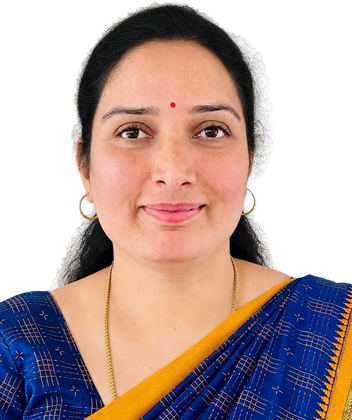
Dr. Jyothi D N
The Department of Civil Engineering is emerging as one of the fastest-growing branches by imparting quality education to students in all the major areas of civil engineering. All faculty in the department are well qualified with experience in both teaching and industry. The department is forecasting the vision of the college and striving hard to make students technically excellent, culturally vibrant, socially responsible and globally competent. Students are exposed to practical real-time studies, training them to analyse and provide solutions. Along with the curriculum, students are trained in all dimensions through seminars, workshops, hands-on work, technical talks, industrial visits, internships and site visits. This provides a well-built platform to enhance their enthusiasm and practical knowledge, making them confident to tackle any civil engineering challenges and to be innovative with growing technology.
Vision
To develop globally competent civil engineers who excel in academics, research and are ethically responsible for the development of the society.
Mission
- To provide quality education through faculty and state of the art infrastructure.
- To identify current problems in the society pertaining to Civil Engineering disciplines and to provide solution effectively and efficiently.
- To inculcate the habit of research, leadership and entrepreneurship in our graduates to explore current infrastructure needs of society.
Programme Educational Objectives (PEOs)
PEO1: Engaged in professional practices, such as construction, environmental, geotechnical, structural, transportation, water resource engineering by using technical, communication and management skills.
PEO2: Engaged in higher studies and research activities in various civil engineering fields and life time commitment to learn ever changing technologies to satisfy increasing demand of sustainable infrastructural facilities.
PEO3: Serve in a leadership position in any professional or community organization or local or state engineering board.
PEO4: Registered as professional engineer or developed a strong ability leading to professional licensure being an entrepreneur.
Programme Outcomes (POs)
PO1. Engineering Knowledge: Apply fundamental knowledge to solve complex engineering problems.
PO2. Problem Analysis: Identify and formulate complex problems to reach substantiated conclusions.
PO3. Design/Development of Solutions: Create solutions that meet specific needs, considering health, safety, and environmental factors.
PO4. Conduct Investigations of Complex Problems: Use research-based methods to design experiments, analyze, and interpret data.
PO5. Engineering Tool Usage: Select and apply modern techniques and IT tools to engineering activities.
PO6. The Engineer and the World: Understand the impact of professional engineering solutions on society and the environment.
PO7. Ethics: Commit to professional ethics and responsibilities.
PO8. Individual and Collaborative Team Work: Function effectively as an individual or team member in multidisciplinary settings.
PO9. Communication: Communicate effectively regarding complex engineering activities with the engineering community and society.
PO10. Project Management and Finance: Apply management and financial principles to project work.
PO11. Life-Long Learning: Engage in independent and life-long learning in the context of technological change.
Programme Specific Outcomes (PSOs)
PSO1: Provide necessary solutions to build infrastructure for all situations through competitive plans, maps and designs with the aid of a thorough Engineering Survey and Quantity Estimation.
PSO2: Assess the impact of anthropogenic activities leading to environmental imbalance on land, in water & in air and provide necessary viable solutions revamping water resources and transportation for a sustainable development.
Course
| Programme | Leading to… | Duration | Intake |
|---|---|---|---|
| Civil Engineering | B.E | 4 year | 30 |
Short Term Goals
- To Build and promote teams of Experts in curricular and Co-Curricular activities.
- Professional growth of Faculty.
- Motivate and Promote Students and faculties and Organize and Participate in national/International symposiums, Conferences.
- To Collaborate with Corporates to enhance the Practical knowledge.
- Promotion of R&D Activities in of science and technology with special emphasis on emerging domain.
Long Term Goals
- To continuously upgrade the physical and laboratory infrastructure.
- Establishing centre of excellence of different specialized areas.
- To motivate the faculty to remain exposed to the industrial processes and activities.
- To promote quality research and undertake research projects keeping in view their relevance to the needs and requirements of technology.
Class Incharge — CE (Academic Year 2026–27)
| Sl. No. | Semester | Section | Class Incharge | Mail ID | Phone |
|---|---|---|---|---|---|
| 1 | 3rd | A | Prof. Akhila C G | akhilacg_cv@atme.edu.in | 9743726895 |
| 2 | 5th | A | Prof. Rudresh A N | rudreshan_cv@atme.edu.in | 9743580290 |
| 3 | 7th | A | Prof. Bharathi B | bharathib_cv@atme.edu.in | 8496009262 |