
About the Department
- Established
- Established: 2021
- Initial Intake: 60, Current strength: 169 (2nd to 4th Year)
- Academic Excellence
- Industry-oriented curriculum aligned with VTU and emerging technologies.
- Focus on Data Science, Artificial Intelligence, Machine Learning, Deep Learning, Big Data Analytics, Data Engineering, and Cloud Computing.
- Outcome-Based Education (OBE) with experiential and project-based learning.
- Faculty Expertise
- Data Science & Analytics
- Artificial Intelligence & Machine Learning
- Deep Learning & Computer Vision
- Data Engineering & Big Data
- Cloud Computing
- Internet of Things (IoT)
- Cyber Security
- Full Stack Development
- Facilities & Infrastructure
- Modern computing laboratories with high-speed internet.
- ICT-enabled smart classrooms and seminar hall.
- Specialized laboratories for Data Science, AI/ML, and Programming.
- Access to open-source tools, cloud platforms, and industry-standard software.
- Training & Industry Linkages
- Industry collaborations for internships, workshops, and expert talks.
- Value-added courses in Python, Data Analytics, AI, ML, Generative AI, Cloud Computing, and Full Stack Development.
- Regular coding contests, technical workshops, hackathons, and certification programs.
- Placement-focused training in aptitude, technical skills, communication, and interview preparation.
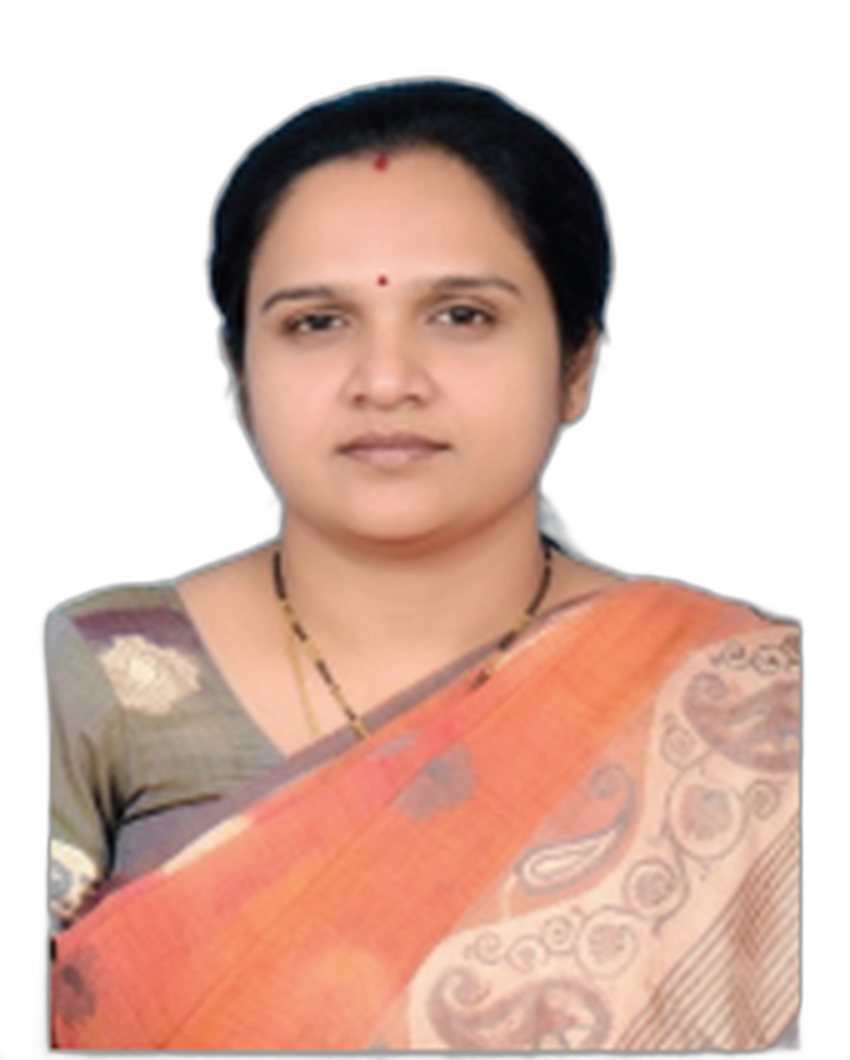
Dr. Anitha D B
- Educational Approach
- Outcome-Based Education (OBE) with student-centric learning.
- Experiential learning through hands-on laboratory sessions, real-time projects, internships, and industry interactions.
- Collaboration with industry partners and training institutes for emerging technology skill development.
- Encouragement to pursue NPTEL, SWAYAM, MOOC, and other industry certifications for Honors, Minor Degrees, and continuous learning.
- Research & Innovation
- Faculty actively involved in research, publications, funded projects, and consultancy.
- Research focus areas include Artificial Intelligence, Machine Learning, Data Science, Big Data Analytics, Computer Vision, Natural Language Processing, Cloud Computing, and Generative AI.
- Promotion of interdisciplinary research, innovation, and entrepreneurship through project-based learning.
- Student Excellence
- Active participation and achievements in hackathons, coding competitions, technical symposiums, project exhibitions, and innovation challenges.
- Students are encouraged to undertake internships, industry projects, research activities, and certification programmes.
- The Datanauts Club provides a platform for students to organize technical events, workshops, coding contests, and peer-learning activities.
- Our Commitment: We are committed to developing skilled, ethical, and industry-ready data science professionals through quality education, innovation, and practical learning.
Vision
To impart technical education in the field of data science of excellent quality with a high level of professional competence, social responsibility and global awareness among the students
Mission
- To impact technical education that is upto date, relevant and makes students competitive and employable at global level
- To provide technical education with a high sense of discipline, social relevance in an intellectually ethically and socially challenging environment for better tomorrow
- Educate to the global standards with a benchmark of excellence and kindle the spirit of innovation.
Programme Educational Objectives (PEOs)
PEO1: Graduates will have successful careers in Data Science, AI, and related domains through strong technical and analytical skills.
PEO2: Graduates will pursue higher education, research, and engage in lifelong learning to adapt to evolving technologies.
PEO3: Graduates will demonstrate professionalism, ethical responsibility, teamwork, and leadership in multidisciplinary environments.
PEO4: Graduates will contribute to society by developing innovative and sustainable solutions using Data Science
Programme Outcomes (POs)
PO1. Engineering Knowledge: Apply fundamental knowledge to solve complex engineering problems.
PO2. Problem Analysis: Identify and formulate complex problems to reach substantiated conclusions.
PO3. Design/Development of Solutions: Create solutions that meet specific needs, considering health, safety, and environmental factors.
PO4. Conduct Investigations of Complex Problems: Use research-based methods to design experiments, analyze, and interpret data.
PO5. Engineering Tool Usage: Select and apply modern techniques and IT tools to engineering activities.
PO6. The Engineer and the World: Understand the impact of professional engineering solutions on society and the environment.
PO7. Ethics: Commit to professional ethics and responsibilities.
PO8. Individual and Collaborative Team Work: Function effectively as an individual or team member in multidisciplinary settings.
PO9. Communication: Communicate effectively regarding complex engineering activities with the engineering community and society.
PO10. Project Management and Finance: Apply management and financial principles to project work.
PO11. Life-Long Learning: Engage in independent and life-long learning in the context of technological change.
Programme Specific Outcomes (PSOs)
PSO1: Graduates will be able to design, implement, and manage scalable data engineering solutions, including data pipelines, storage systems, and big data frameworks for efficient data processing.
PSO2: Graduates will be able to develop and deploy machine learning models and data analytics solutions to solve real-world problems across various application domains
Course
| Programme | Leading to… | Duration | Intake |
|---|---|---|---|
| Computer Science & Engineering – Data Science | B.E (CSE – DS) | 4 Years | 60 |
Class Incharge — DS (Academic Year 2026–27)
| Sl. No. | Year | Class Incharge | Mail ID |
|---|---|---|---|
| 1 | 2 | Ms Madhu Nagaraj | madhunagaraj_cd@atme.edu.in |
| 2 | 3 | Dr. Neethi M V | Dr.neethimv_cd@atme.edu.in |
| 3 | 4 | Ms. Sushmitha N | sushmithan.cd@atme.edu.in |